DECODING
DECISION MAKING
We like to believe our decisions are rational and consciously made. But neuroscience and behavioural science reveal something very different. Discover the hidden forces shaping what you buy, believe, pursue and avoid— and learn how to make more conscious choices in an increasingly AI-driven world.
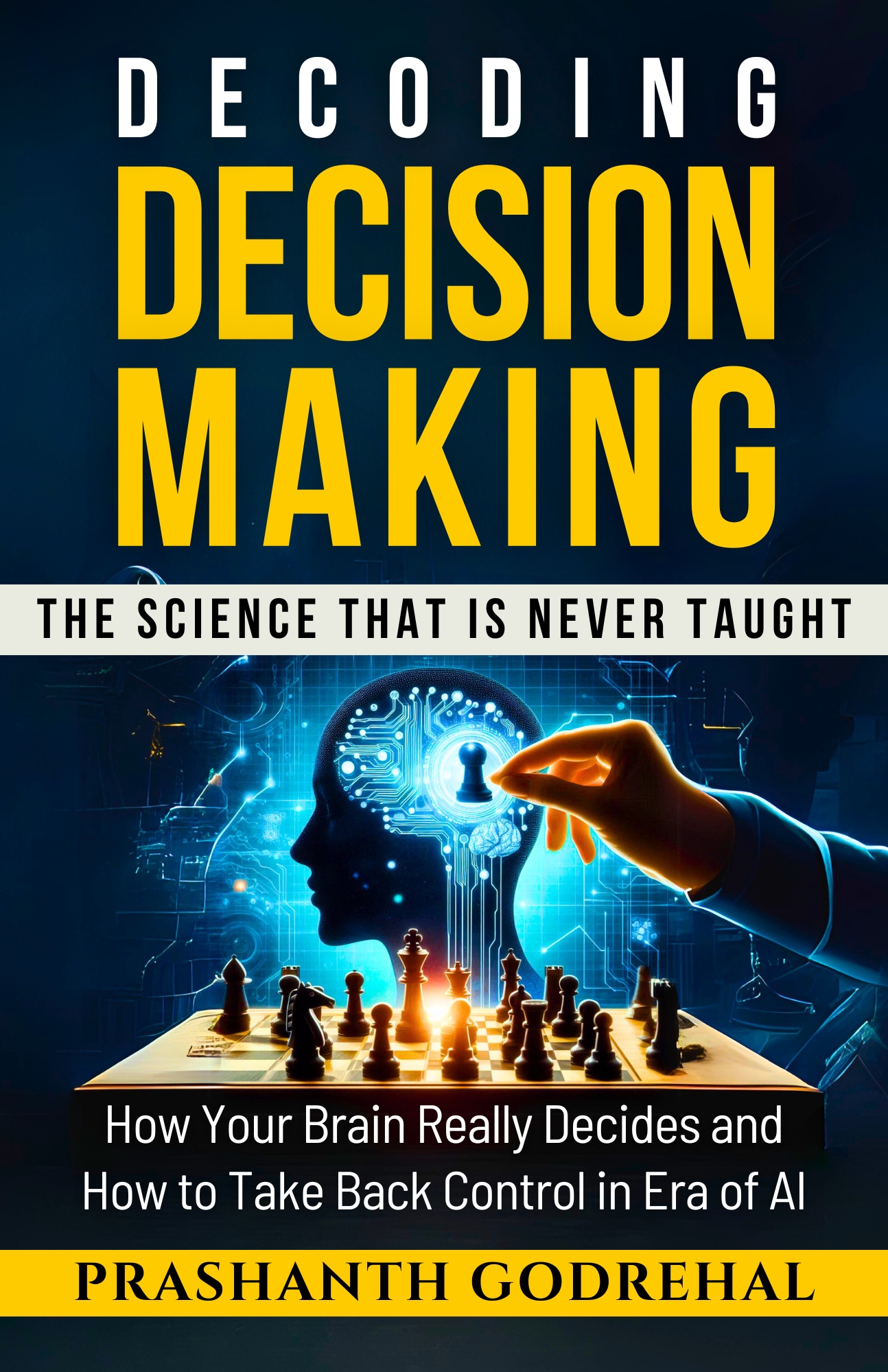
How Biology—and AI—Can Hijack Your Decisions
Not ready to read the complete book yet? Start with this conversational audio summary exploring why the human brain evolved to choose fast and safe—and what happens when those ancient instincts meet algorithms, social media and AI.
Who Is Really Making Your Decisions?
Decision-making shapes almost everything in our lives. Yet very few of us were ever formally taught how our own mind decides.
Ancient Brain.
Modern World.
Your Brain Is Not a Rational Computer.
It Is a Survival Machine.
For most of human history, survival depended less on perfect analysis and more on responding quickly to opportunities and threats.
That architecture still influences how we make modern decisions— from careers and money to relationships, business and technology.
Six Forces Quietly Shaping Your Decisions
What feels like one conscious decision is often the final step in a process that began much earlier.
Instinct
Rapid evaluations of threat, reward and opportunity— often before conscious awareness.
Emotion
Feelings shape what attracts us, worries us and feels “right.”
Biases
Mental shortcuts simplify complexity, but can also distort judgment.
Habits
Repeated decisions gradually become default decisions.
Influence
Authority, scarcity, social proof and belonging alter what feels desirable.
AI & Algorithms
Technology increasingly predicts what captures your attention and reduces friction between impulse and action.
AI Gives Us More Intelligence.
But Judgment Still Matters.
AI dramatically reduces information scarcity. What it does not eliminate is uncertainty.
AI Excels At
- Pattern recognition
- Research
- Data analysis
- Prediction
- Optimization
Leadership Still Requires
- Trade-offs
- Values
- Ethics
- Timing
- Human emotions
- Organizational culture
- Ownership
It cannot ultimately decide what is right for you.
A Practical Decision Framework
Better decisions do not require perfect information. They require a better process.
A Few Thoughts Worth Pausing On
“Your brain is not a rational computer. It is a survival machine.”
“Not making a decision is itself a decision.”
“Safe is not always best.”
“Decisions aren’t about certainty. They’re about probabilities and possibilities.”
“If you don’t understand how your mind decides, someone else will.”
“The goal isn’t certainty. The goal is clarity.”
“AI can improve intelligence. Judgment still requires ownership.”
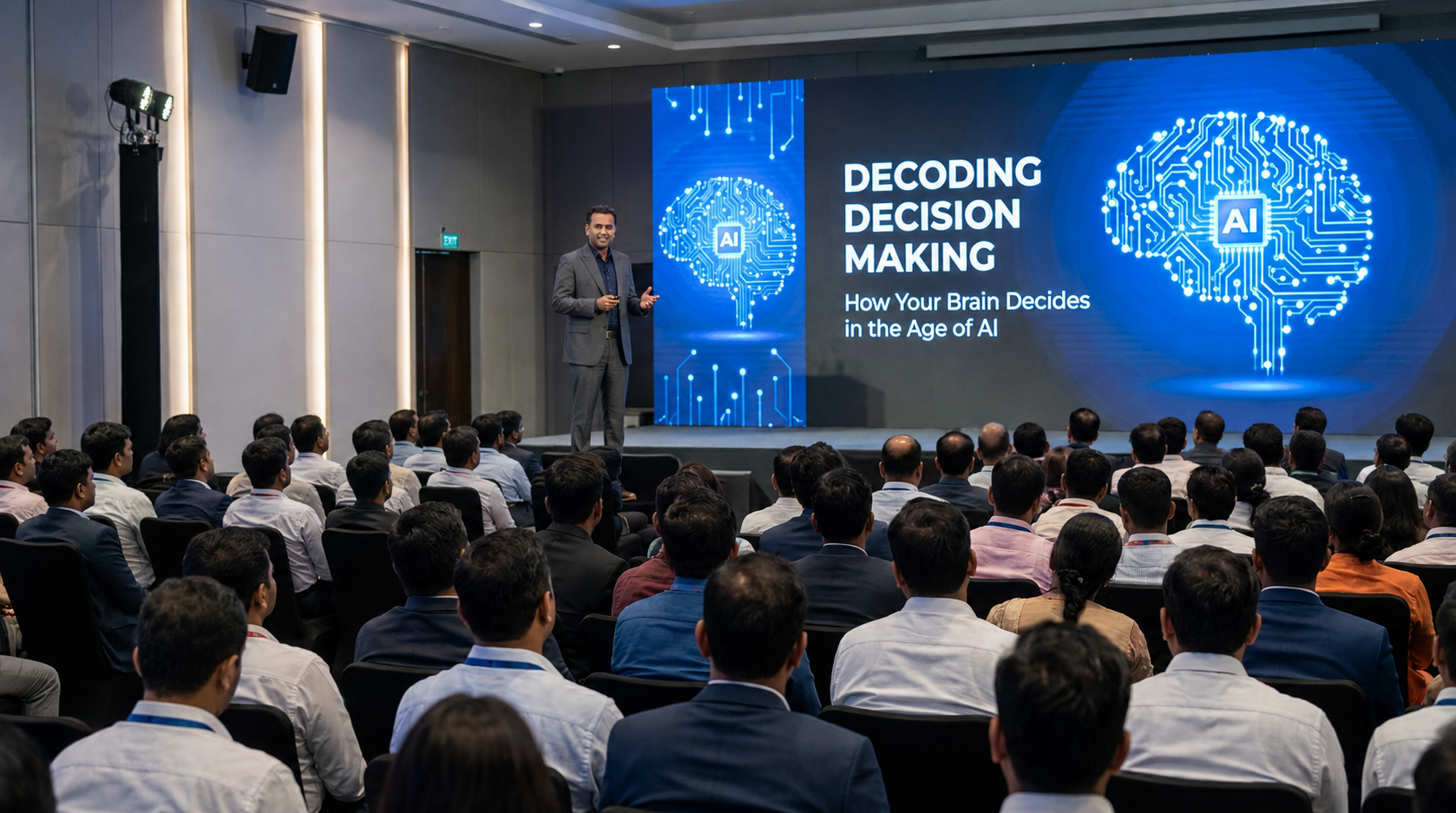
Bring Decision Science to Your Organization
AI is changing how quickly organizations can analyze information. That makes human judgment, clarity and ownership increasingly important.
Keynote
Decoding Decision MakingHow your brain really decides, why safe and fast often beats best, and how leaders can reclaim conscious judgment in the age of AI.
Leadership Session
AI + JudgmentHow leaders can use AI for research, prediction and analysis without outsourcing purpose, accountability and ownership.
Interactive Workshop
The Decision LabApply behavioural science, influence principles and practical decision frameworks to real business challenges.
Explore the Complete Book
A practical, story-driven exploration of neuroscience, behavioural science, influence, habits, intuition, AI and the frameworks behind better decisions.
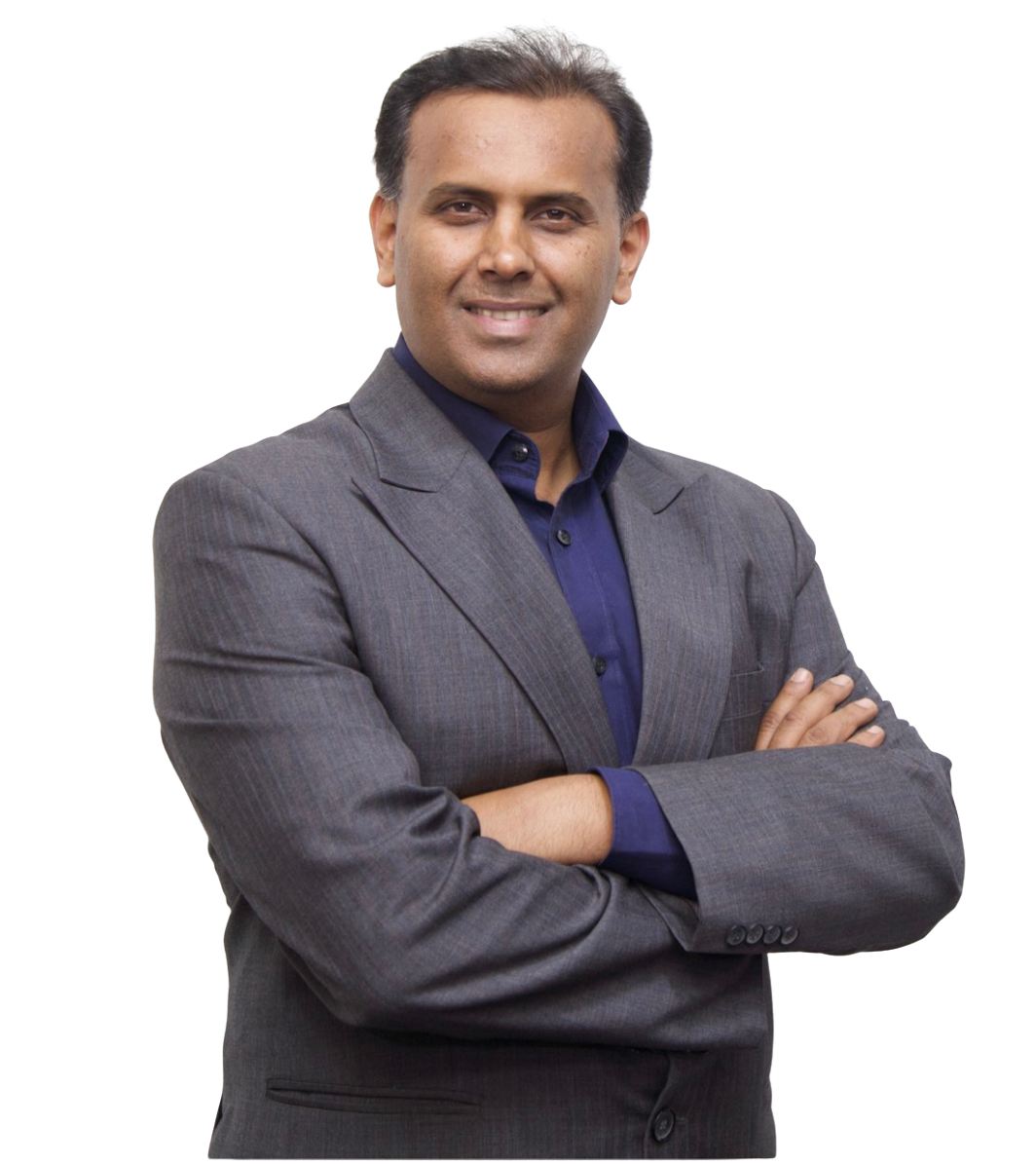
Prashanth Godrehal
Author • Speaker • Entrepreneur • Cialdini Institute Certified Coach
Prashanth’s work sits at the intersection of decision science, behavioural psychology, influence, leadership and AI.
Drawing on more than two decades of studying human behaviour, business decisions and the science of influence, his work explores one deceptively important question:
Why do intelligent people make the decisions they do?
As a Cialdini Institute Certified Coach and Ethical Influence Practitioner, he combines neuroscience, behavioural science, philosophy and practical business experience to make complex ideas about human behaviour useful in everyday life.
Who—or What—Is Making Your Decisions?
AI will become better at analysis. Algorithms will become better at predicting behaviour. Persuasion will become increasingly personalized. Understanding your own mind is becoming a competitive advantage.